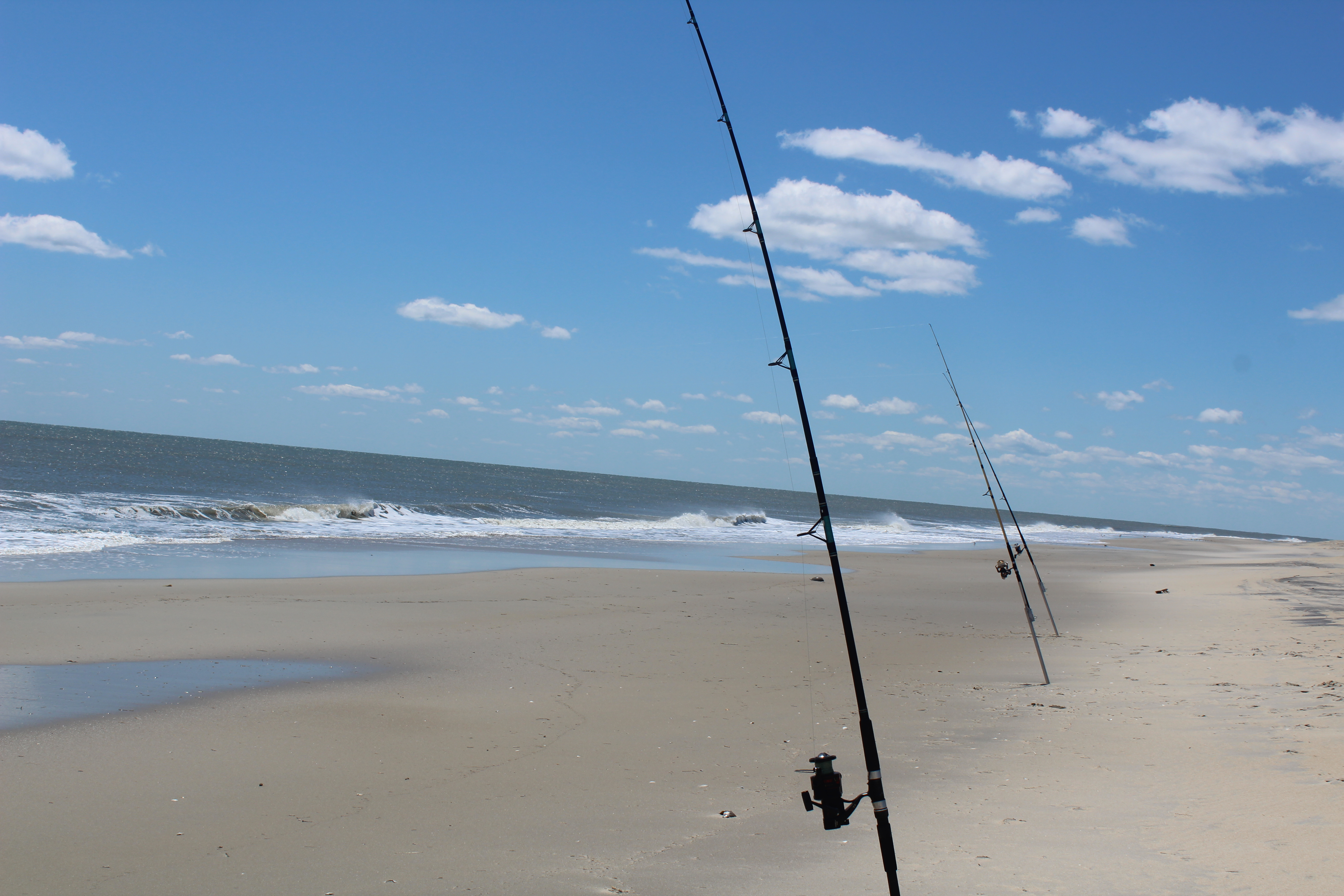
Casting was one of my early research topics. I had been casting the same way for thirty years and rarely was able to get more than 100 ft. in surf fishing conditions. I decided to take a look at casting techniques and was shocked to discover that I was doing everything wrong. In my defense I’d like to add that most surf fishermen do not cast well , according to some articles, up to 90% of us do not have good casting technique. With this humbling information in hand I set out to learn to cast well.
Being able to cast a long distance while surf fishing is what we all aim for. There is something very satisfying about a great cast and it makes me feel like I have a better chance of hooking a great fish. When I get to the “Reading the Beach” posts you’ll see why fish can be at many different distances from the shore, including right in front of you, so distance is not always the challenge. But, if you can’t heave your bait out 300 ft., you’re robbing yourself of opportunity.
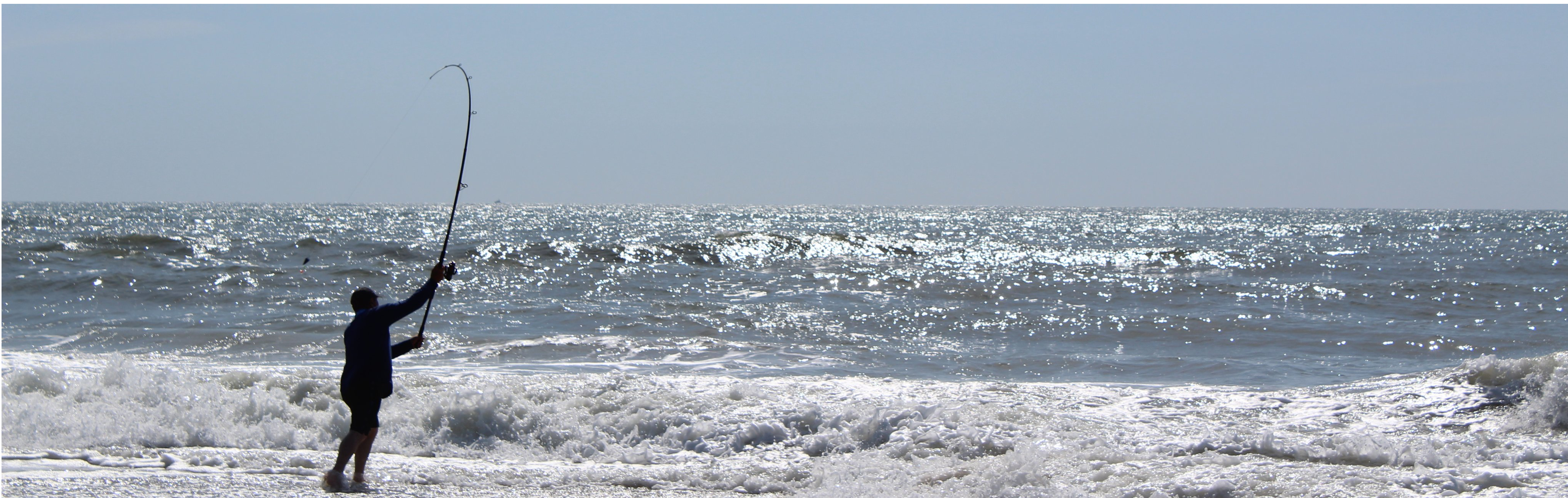
Most of us learned our cast either by watching other fishermen or via trial and error. I learned from my dad when I was 10 years old. In general we cast with the strength from our top arm (the one holding the line on the reel). After some research, it’s clear that this method of casting does not take advantage of the physics of the surf casting rod or the human body. I now visualize surf casting as being like a human catapult. My goal in casting is to load that catapult up with as much power as I can during the cast.
Once I dug into casting for surf fishing, I found that it had become a well formed discipline with certain popular techniques from around the world, that ensured a good long distance cast. Distance casting even has competitions, who knew? While researching the Brighton Cast, I watched quite a few videos from the UK and was surprised to see the differences in how they setup their gear. For one thing, they mount the reel at the bottom of the rod which switches the hand managing the spool during casting.
After reading many articles and watching lot’s of videos, I have landed on the following three casting techniques all of which work by loading the rod with energy as opposed to throwing with the rod.
| Technique | Description | Post Link |
| Brighton Cast | Sometimes called the Beginners Cast is a ground based cast where the your bait and terminal tackle starts on the ground. Emphasis is put on getting the rod moving and using the arm holding the bottom of the fishing pole to derive power. |  |
| Hatteras Cast | Similar to the Pendulum cast with a shorter swing of the terminal tackle before moving into the cast. Emphasis is put on keeping your arms out in front of you and driving power from the arm holding the bottom of the fishing pole. | |
You will see that the Brighton Cast is a predecessor to the Hatteras Casting techniques. All of theses casts use techniques that force you to keep your arms away from your body and place the bulk of the work on your bottom hand while using your top hand as a fulcrum. My favorite and the one I now use is the Hatteras Cast.
Reading diagrams and descriptions about an activity like casting only takes us so far. If you’re like me you need visual examples, instruction and practice. Luckily, there are lots of videos on YouTube and I’ve linked to my favorites in each of the casting technique posts. One of my favorite experts is Tommy Farmer, he is excellent at describing and demonstrating casts as well as being an accomplished competitive caster and surf fisherman. I encourage you to visit his website, Carolina Cast Pro. and check out his DVD “Comprehensive Guide to Power Casting“.
Shock Leader
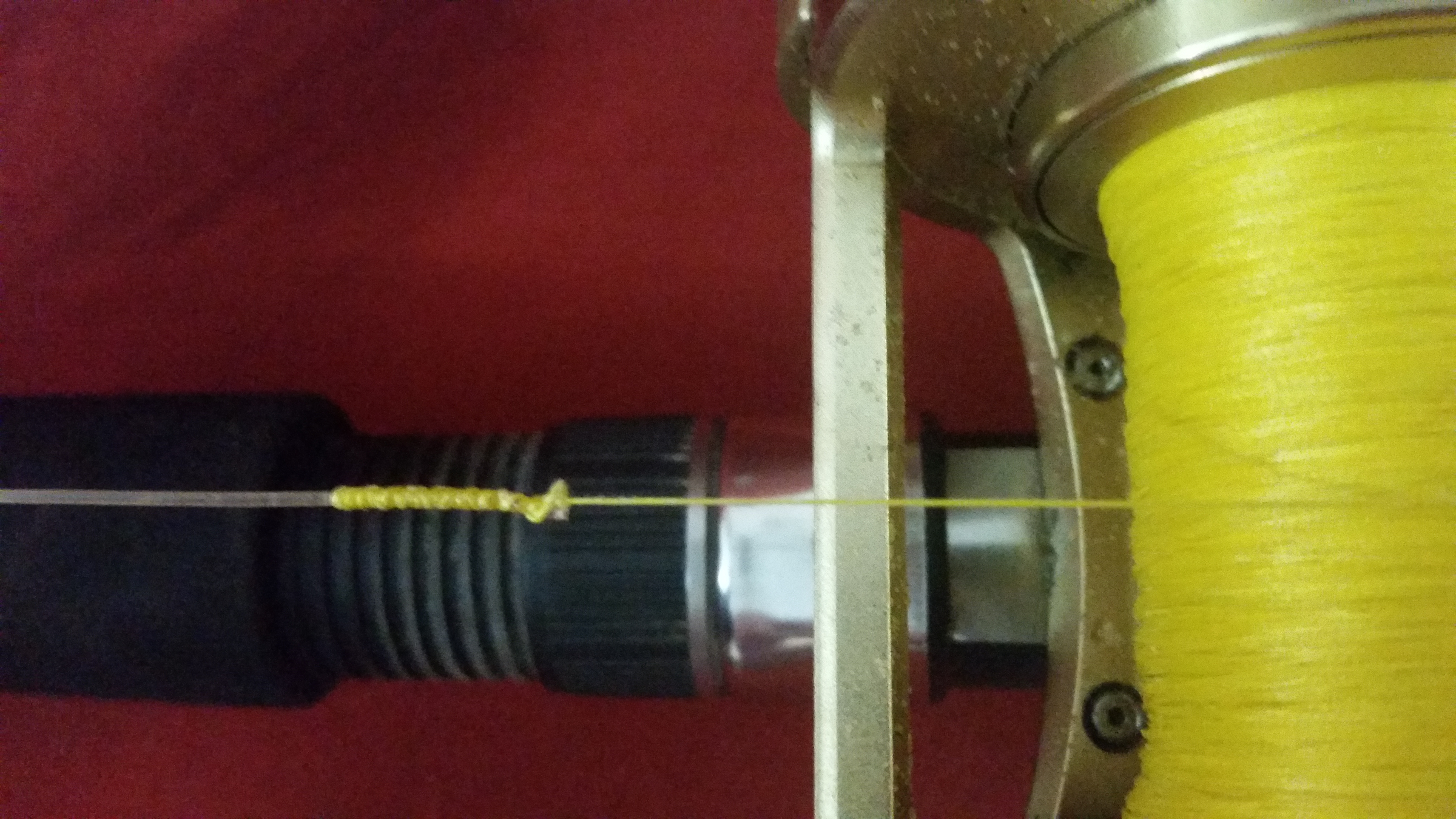
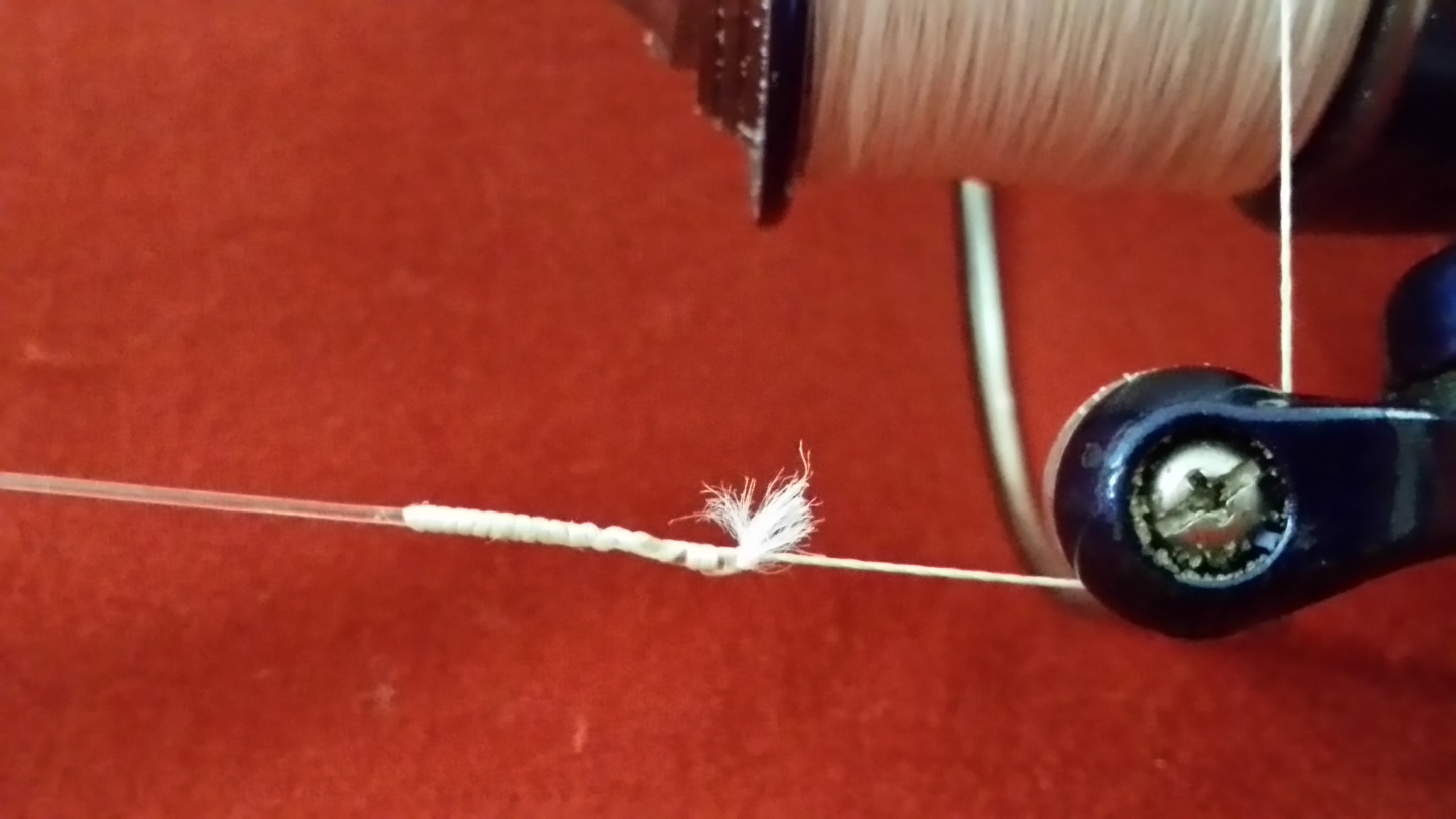
These casting techniques can put a tremendous strain on your fishing line. In order to ensure that your line won’t break off during your cast, you will need to use a shock leader. The shock leader is a length of heavy (50lb -80lb Monofilament, Fluorocarbon or even heavier Braided line) that absorbs the strain and shock of the cast. It is usually twice the length of your rod plus three to five times around the spool. I have a full post on shock leaders, make sure to read through it and attach one before you start experimenting with these techniques.
Surf Rod Specifications
Before you start casting make sure your rod is rated for the weight you are going to throw. Your rods rating will usually be written on the base of the rod and should include most of the information described in the table below. Do not try to cast beyond your rods rating. If you cannot find specification information printed on your rod, get the model number and look it up online, Google will find it.
| Length | Rods for surf fishing are generally between ten and twelve feet. |
| Power | The amount of force needed to bend the rod that describes the stiffness of the blank the rod was made from. For surf fishing we are looking for rods from medium-heavy to extra-heavy power. Power is usually directly tied to the recommended line weight and lure weight. |
| Action | The degree to which a rod will bend from the tip. For surf fishing we like medium-fast to fast rod action. |
| Lure Weight | The ideal weight range of the terminal tackle for loading the rod during casts |
| Line Weight | The heavier the rod power, the higher the line weight will be. Make sure to select a rod that supports the effective monofilament test weight you will be using. |
Practice
I spent a fair amount of time practicing my new technique using just my rod with no line. Once I got to the beach, it took about two days for me to get all the kinks ironed out. Once I was comfortable with the new technique, my distance more than doubled. An interesting side benefit was that I no longer needed to wade into the surf to cast to where I wanted my bait to be. Trying to cast with waves breaking against you is difficult and dangerous so not having to wade out was great.
Initially, I practiced in the backyard with just my ten foot rod. I worked the proper technique repeatedly until I felt coordinated enough with the technique to try it with line and weight. If you are used to using a taller rod, drop back to a ten foot rod while you’re learning the technique, it will help a lot. I restrict my practice with line and weight to the beach to avoid hurting a bystander or passer by. Casting a 6 oz. plus weight can be very dangerous to anyone who might be hit with it. Do not practice in an area where there is anyone in the direction that you will be casting.
Safety
Always make sure that you have sufficient space around you when casting. You will have sharp hooks and heavy weights that can seriously hurt a bystander or fellow fisherman. Never use these casting techniques on a busy beach that has swimmers and sun bathers. These casting techniques can put a heavy strain on the line your holding on the reel so use a finger guard to protect the skin on your finger.
Leave a Reply