

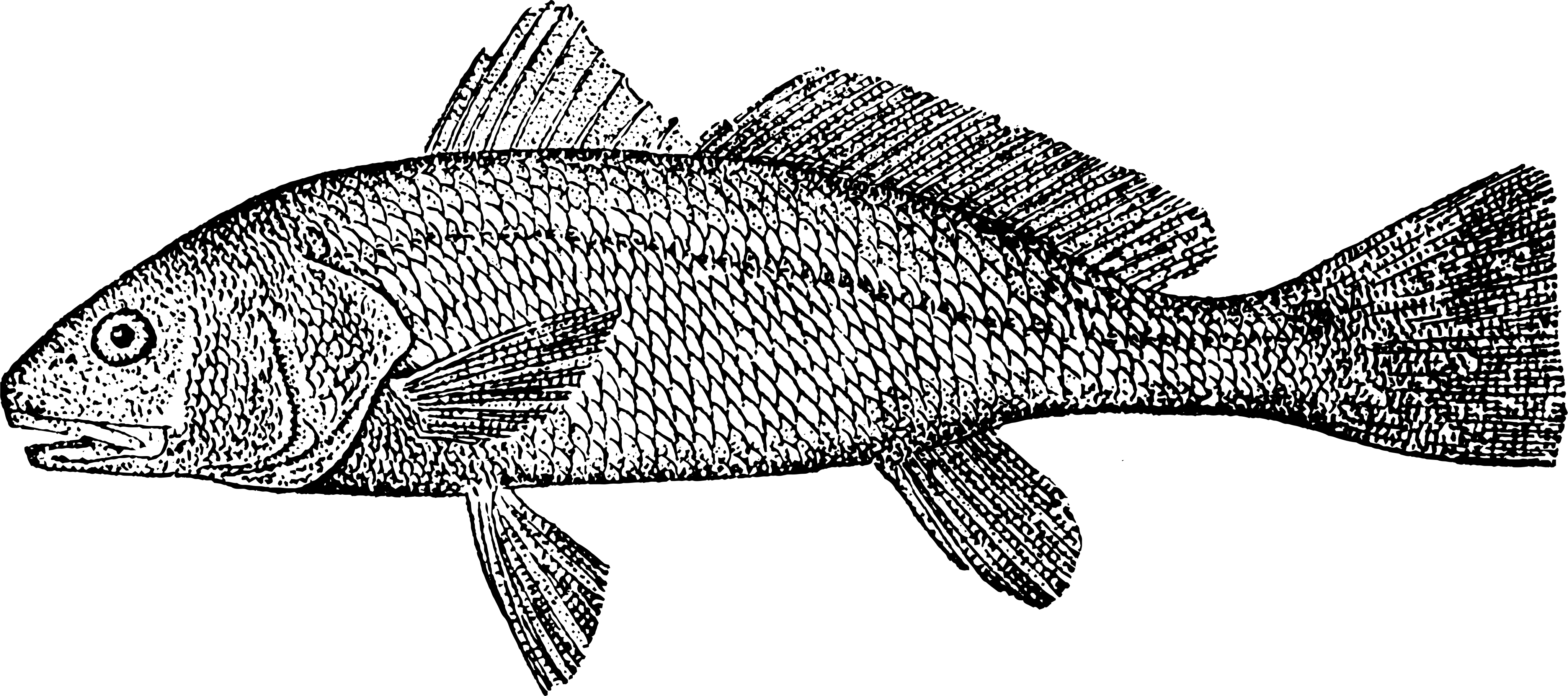
Few fish get the attention of a Delmarva surf fisherman like a big red drum.
When a 30-, 40-, or even 50-pound red drum picks up a bait in the surf, the fight can take you well down the beach. These powerful fish combine size, speed, and endurance, making them one of the most exciting fish an angler can encounter from the Atlantic shoreline.
For the surf fisherman on the Delmarva Peninsula, red drum are also a lesson in reading the beach. They aren’t necessarily found at the end of the longest cast. They follow bait, current, water temperature, and structure—and understanding those conditions can put you in a much better position to find them.
Red drum can be encountered along the Atlantic beaches of Delaware, Maryland, and Virginia, but their distribution changes throughout the year.
Some of the most productive areas are associated with the natural features that concentrate bait and moving water:
- Deep troughs along the beach
- Sloughs between sandbars
- Cuts through the outer bar
- Rip currents
- Beach points
- Inlets and inlet-adjacent beaches
- Areas with strong tidal current
- Beaches holding large concentrations of baitfish
The important thing is to look for structure and current, rather than simply looking for a place where someone caught a fish yesterday.
A red drum doesn’t need to travel far to find food if the beach is doing the work for it.
For many Delmarva anglers, fall is the season when red drum become particularly interesting.
As summer gives way to fall, changing water temperatures and migrating baitfish can bring large predators along the coast. Red drum may move through the Mid-Atlantic as they travel between seasonal feeding and spawning areas.
This is one reason the fall surf can be so productive.
A beach that seems quiet one day can suddenly come alive when migrating baitfish arrive.
Watch for:
- Mullet moving along the beach
- Menhaden schools
- Spot and croaker
- Diving birds
- Bait breaking the surface
- Changes in water temperature
- Increasing current around troughs and cuts
Latest Posts

When surf fishing we use line in two ways that should be considered separately. First, there is our running line or main line which is…

Fish in the surf are like fish everywhere, they like structure from which to ambush their prey. We want to place our baits in these…

All of the casting techniques I found focus on getting the rod loaded with energy instead of using your arm strength to heave your rig.…

I came across this knot while preparing to get my casting technique in order. I was looking for a knot that would work well with…

Before we start casting into the far horizon, dropping our bait into the path of record breaking Blues, Stripers and Drum, we need to make…

The fish finder rig is one of the most popular and versatile rigs for surf fishing. This rig allows the bait and hook to move…

Ever wonder how much that fish weighed after you’ve caught, measured and released it. Here’s a helpful dashboard for looking up your fish’s weight based…

Persistence through harsh conditions in pursuit of trophy fish is a trait shared by all serious surf fishing anglers. Proudly display your passion for surf…

Mike and I have been friends since we were twelve, growing up in Marlborough, MA. We met at school and decided to go fishing at…

I had always used the good old clinch knot that my dad taught me when I was ten years old. I used it for all…
Leave a Reply